This guide contains affiliate links. Details are at the end of the page.
Updated 13 October 2026 · Prices checked 12–13 October 2026
A walking pad (some shops call it a walkpad or walking mat) is a flat, motorised belt for slow walking. It has no tall console and slides under a sofa or bed when you are done. Irish buyers usually care about four things: will it fit, will the neighbours hear it, can it take my weight, and what does delivery cost? This guide compares walking pads you can order in Ireland today, starting with our short list.
Our top picks at a glance
Prices in euro, 12 Oct 2026
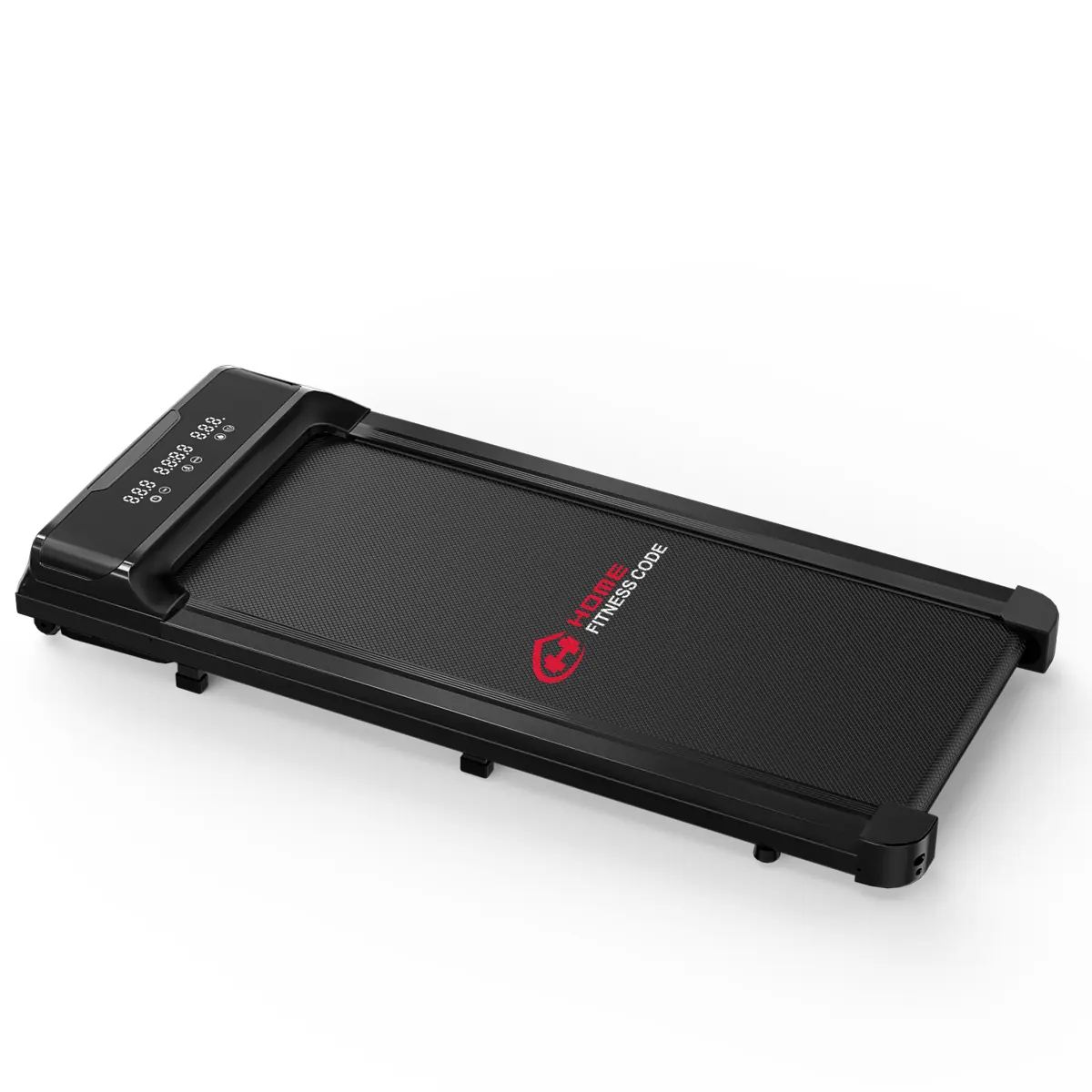
Home Fitness Code Q2 Pro
- Walks and light-jogs: 1–10 km/h
- Brushless motor, stated <35 dB
- Max user 120 kg
€99.99Handrail versions sold out (13 Oct)
See today’s Q2 Pro price
Home Fitness Code Z3
- Lowest noise claim here: <30 dB
- 9.7 cm tall, 13 kg: easy to store
- Walking only: 1–6 km/h, 120 kg
€109.99Handrail version €129.99 (sold out 13 Oct)
See today’s Z3 price
Home Fitness Code C1
- Fold-up handrail option, 1–10 km/h
- 5% manual incline
- Brushed motor, louder claim (<50 dB)
€119.99With handrail · without €99.99
See today’s C1 price
Home Fitness Code Y3
- Max user 150 kg
- Powered incline to 12%, brushless
- Heavier to move: about 20 kg
€199.99With handrail €229.99
See today’s Y3 priceHome Fitness Code ships to Ireland from Germany. On 29 September it stated 1–2 days’ processing plus 6–7 working days’ delivery, a 30-day returns window (buyer pays change-of-mind returns) and a 1-year warranty. Prices and stock change often, so check before you order. Read our honest look at Home Fitness Code before buying.
The short version
- For most people walking at a desk, a 1–6 km/h pad is enough. You only need 10 km/h if you want to jog.
- Check the maximum user weight and leave a margin of 15–20 kg. Many budget pads are rated for only 100–120 kg.
- Incline adds cost and weight. It helps if you want more effort without walking faster: see walking pads with incline compared.
- Noise figures such as “under 35 dB” are manufacturer claims measured in unknown conditions. Treat them as a rough ranking, not a promise.
- Buy from a seller with clear returns. Under Irish consumer law, online buyers generally have a 14-day cooling-off period.
Walking pads compared: published specifications
Swipe the table sideways to see every column →
| Model (retailer) | Price from* | Speed | Incline | Max user | Belt (L×W) | Stated noise |
|---|---|---|---|---|---|---|
| Q2 Pro (Home Fitness Code) | €99.99 | 1–10 km/h | None stated | 120 kg† | 97 × 39.5 cm | <35 dB |
| T7 (Home Fitness Code) | €99.99 | 1–6 km/h | 5% manual | 120 kg | 90 × 38 cm | <40 dB |
| C1 (Home Fitness Code) | €99.99 | 1–10 km/h | 5% manual | 120 kg† | 97 × 39 cm | <50 dB |
| Z3 (Home Fitness Code) | €109.99 | 1–6 km/h | 5% manual | 120 kg | 91.5 × 38 cm | <30 dB |
| Y1 (Home Fitness Code) | €169.99 | 1–10 km/h | 0–12% auto | 145 kg | 98 × 40 cm | <50 dB |
| Y3 (Home Fitness Code) | €199.99 | 1–10 km/h | 0–12% auto | 150 kg | 97 × 39 cm | <35 dB |
| Y5 (Home Fitness Code) | €219.99 (sold out) | 1–10 km/h | 0–15% auto | 150 kg | 97 × 40 cm | <35 dB |
| ITM Walking Pad 400 (Decathlon marketplace) | €149 | 1–6 km/h | 2 manual levels | 100 kg | Not stated | Not stated |
| Body Sculpture EZ Walking Pad (Elverys) | €199 | 1–6 km/h | None | 100 kg | 100 × 40 cm | Not stated |
| Domyos W500B (Decathlon) | €420 | 0.5–8 km/h | None stated | 130 kg | Not stated | Not stated |
| WalkEase Home (EaseMoov) | €275 (out of stock) | 0.5–8 km/h | None | 120 kg | Not stated | <45 dB |
| Kingsmith WalkingPad X21 (McSport) | €899 | 0.5–12 km/h | None | 110 kg | 121 × 46 cm | 75 dB at top speed‡ |
Which walking pad suits which home?
Tightest budget: Q2 Pro, T7 or C1 (from €99.99)
These three share the same starting price, but they differ in useful ways. The Q2 Pro is the strongest all-rounder of the three on paper: it reaches 10 km/h for light jogging and uses a brushless motor, which manufacturers usually present as quieter and longer-lasting. The T7 tops out at 6 km/h, so it is strictly a walking machine, but at 10.5 cm tall and 16 kg it is one of the easier pads to slide under furniture. The C1 also reaches 10 km/h, but it uses a conventional brushed motor and carries a higher noise claim (<50 dB).
Limitations: all three are rated for about 120 kg, and the C1 listing contradicts itself on this. The belts are 38–39.5 cm wide, which is narrower than a gym treadmill. Taller walkers with a long stride may find the 90 cm T7 deck short.
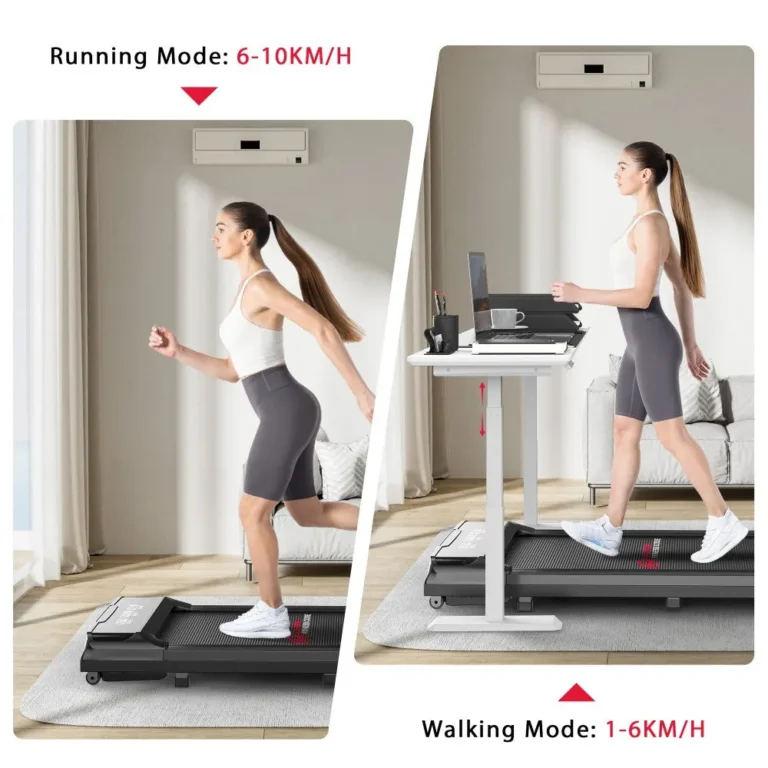
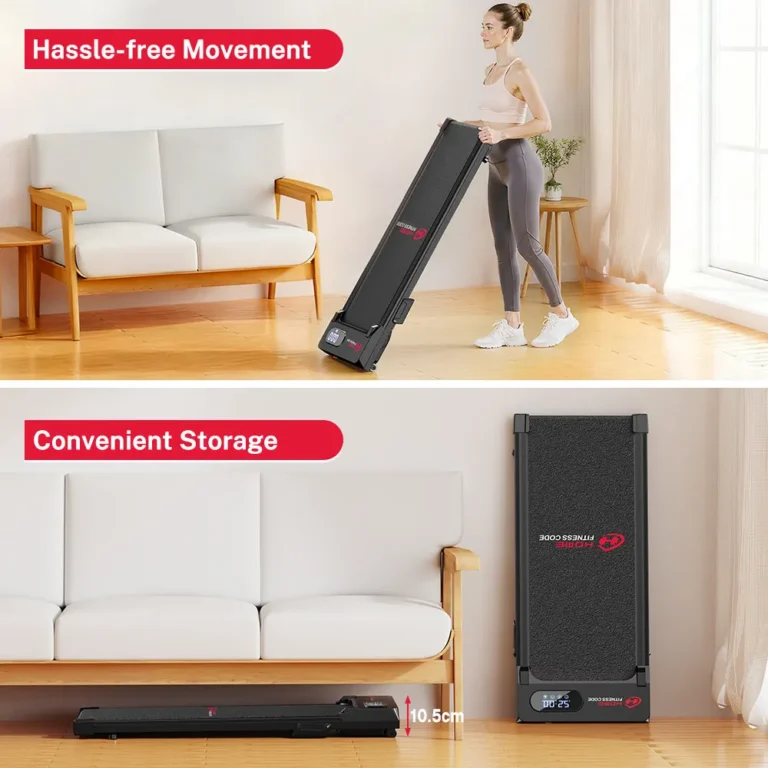
Retailer images from Home Fitness Code, not our own photos.
Check the Q2 Pro price Check the T7 price
Small flats and upstairs rooms: Z3 (from €109.99)
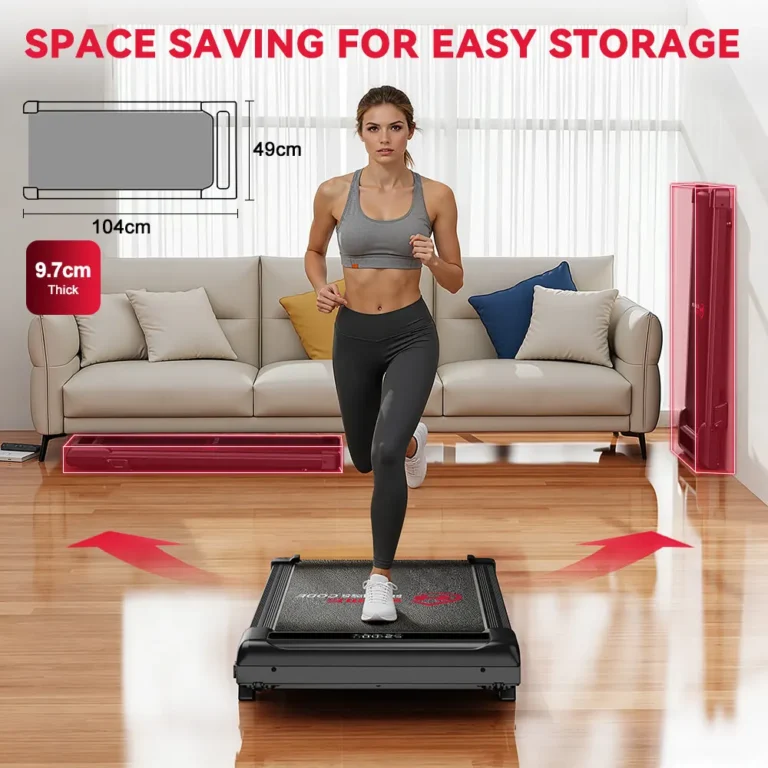
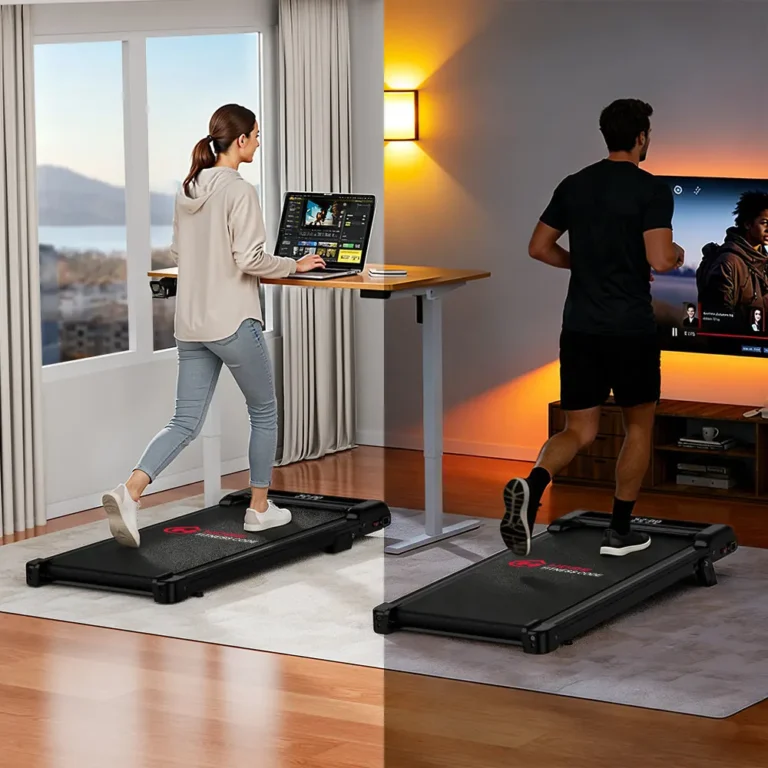
Retailer images from Home Fitness Code, not our own photos.
The Z3 has the smallest footprint in the Home Fitness Code range: 104 × 49 cm, 9.7 cm tall and 13 kg according to the retailer. It also carries the lowest noise claim in this guide (<30 dB) and a brushless motor, and a handrail version costs €20 more. It is limited to 6 km/h, and its manual 5% incline means lifting the front by hand rather than pressing a button. If you live above someone, footfall passing through the floor is often the bigger issue, not motor noise.
Want something to hold on to: C1 or Z3 with a handrail (from €119.99)
On 13 October the cheapest in-stock handrail version was the C1 at €119.99, followed by the Y3 at €229.99. The Z3 handrail version (€129.99) was sold out. The T7 and Q2 Pro handrail versions were also out of stock. A handrail helps with balance and gives you somewhere to rest a phone, but it makes the pad taller to store.
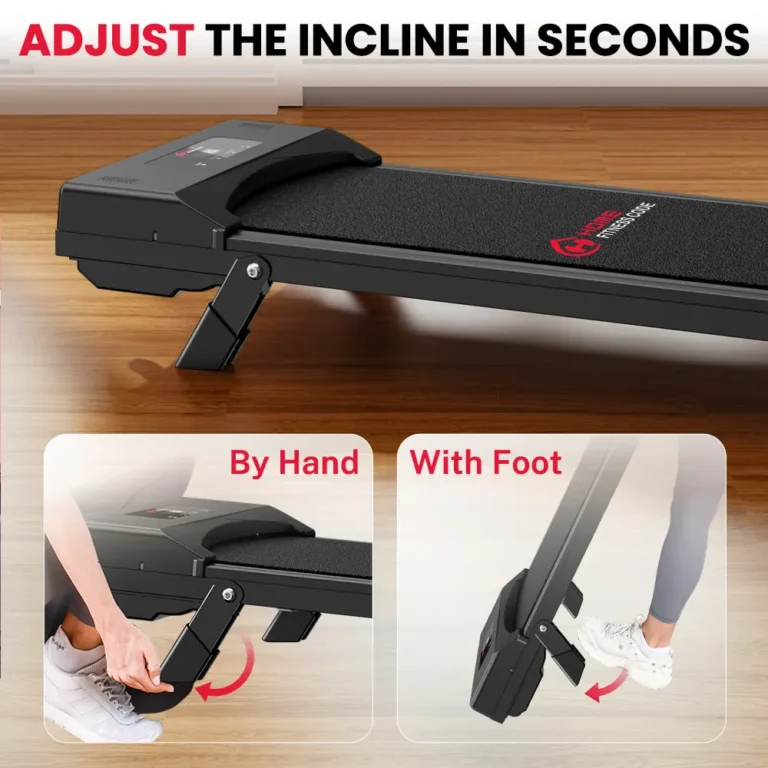
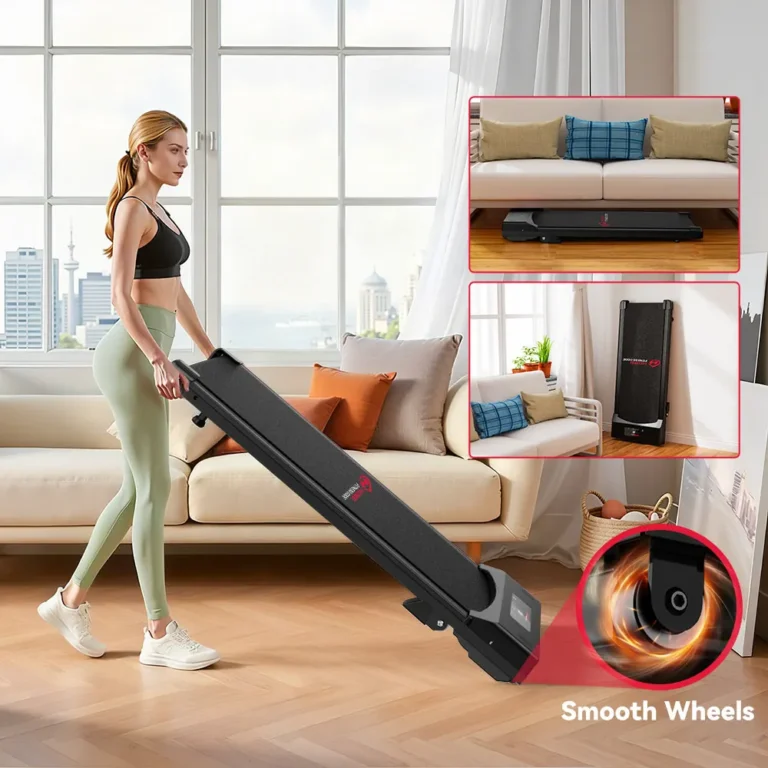
Retailer images from Home Fitness Code, not our own photos.
Heavier users or a harder workout: Y3 (from €199.99)
The Y3 is the only pad in stock here with a stated 150 kg limit, powered incline (to 12%) and a brushless motor. The Y5 has the same limit and goes to 15%, but every version was sold out on 12 October. Both cost roughly twice as much as the entry models, and at around 20 kg they are heavier to move. The Y1 is a cheaper route to powered incline (€169.99, rated 145 kg), but it uses a brushed motor and claims a louder <50 dB.
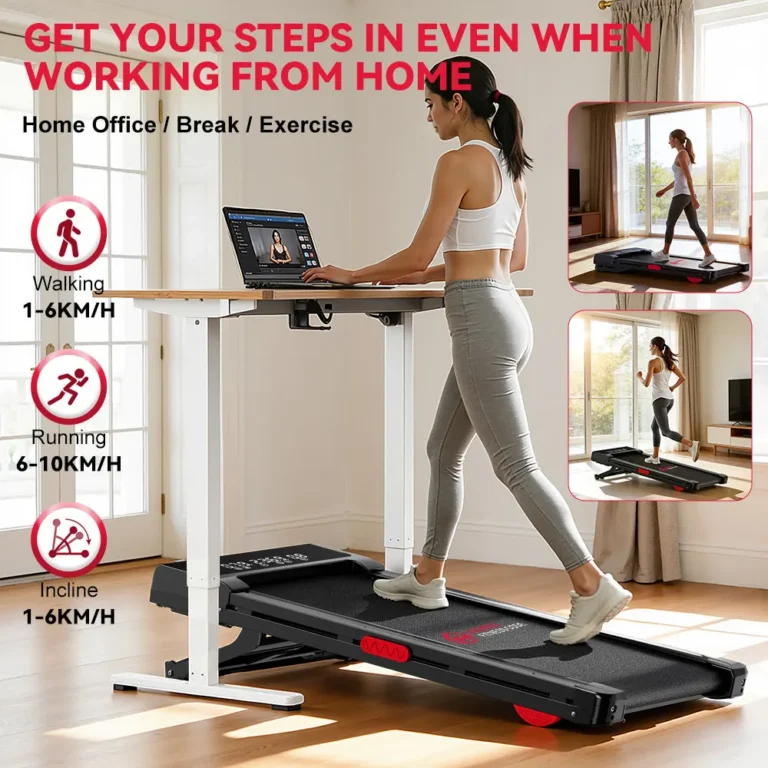
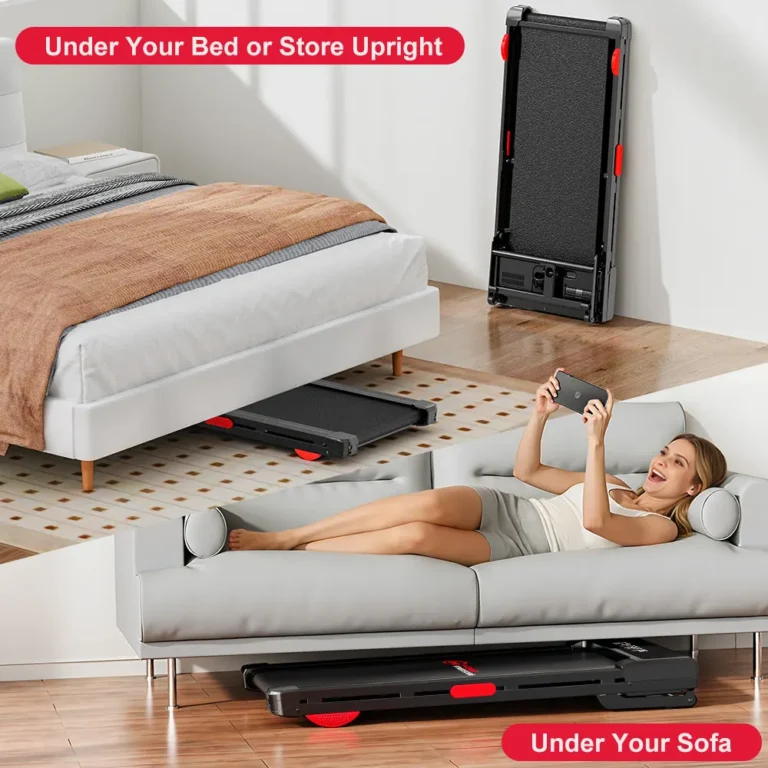
Retailer images from Home Fitness Code, not our own photos.
Premium option that folds upright: Kingsmith WalkingPad X21 (€899)
If budget is less important than build quality and a brand name, the Kingsmith WalkingPad X21 is a different kind of machine. It folds twice to stand upright, reaches 12 km/h, and has a wider 46 cm running area. It also costs about nine times as much as the entry pads above, weighs 38 kg, is rated for only 110 kg, and McSport lists 75 dB at top speed. McSport showed it as out of stock on 12 October.
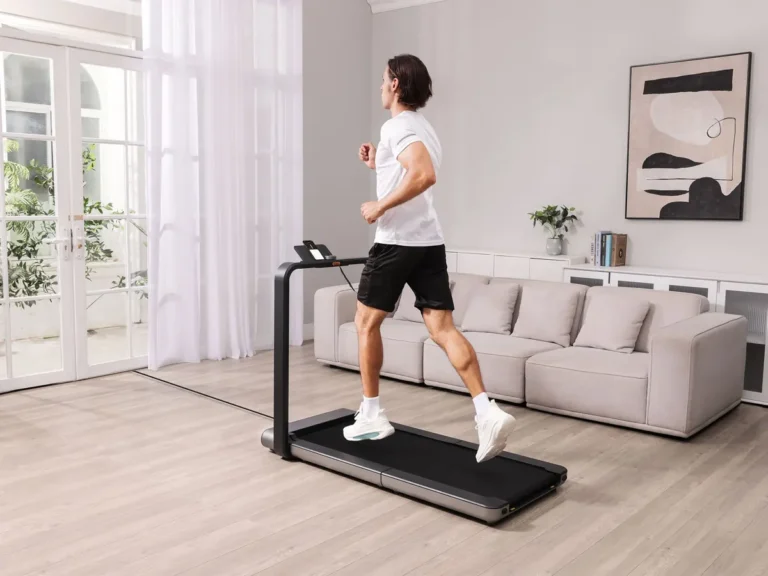
Manufacturer image from Kingsmith, not our own photo.
Irish brand to watch: EaseMoov WalkEase Home (€275, currently out of stock)
EaseMoov, a Dublin-based walking pad brand, lists its WalkEase Home at €275. EaseMoov states 0.5–8 km/h, a 120 kg user limit, an approximate 143 × 54 cm footprint, a remote and LED display, an optional handrail and a 1-year warranty. It does not fold, so check the height of the space where you plan to store it. On 12 October EaseMoov listed all WalkEase models as out of stock, with a free waiting list (no deposit) for its next delivery. If you need a walking pad now, the models above are in stock; if you can wait, it is worth joining the list and comparing the specifications when stock returns. We will update this section when it does.
Prefer to see it in a shop first: Elverys or Decathlon
If you would rather buy from an Irish high-street retailer, Elverys and Decathlon both list a small number of walking pads online (see the elverys.ie listing and the decathlon.ie listing). Elverys had two Body Sculpture models on 12 October, at €199 and €299 (with handrail), both rated for 100 kg. Decathlon’s own-brand Domyos W500B costs €420 and comes with a 2-year warranty. Most of Decathlon’s other walking pads are sold by third-party marketplace sellers. Stock varies by store, so ring ahead. Neither link is an affiliate link.
Delivery, returns and warranty in Ireland
Price is only part of the cost. A walking pad is a 13–25 kg box, so who delivers it, how long it takes and who pays to send it back matter almost as much as the motor. Here is how the retailers in this guide compare for Irish buyers.
| Retailer | Delivery to Irish homes | See or collect in Ireland? | Returns (headline) | Warranty stated |
|---|---|---|---|---|
| Home Fitness Code | Free. Ships from Germany: 1–2 working days to process, then about 6–7 working days | No: online only | 30 days; you pay postage on change-of-mind returns | 1 year |
| Elverys | Home delivery only for home-gym items: €20–€40, 7–15 working days | Try one in selected stores (no click & collect) | 30 days; free returns to any Elverys store | Not stated on the listing |
| Decathlon | Online delivery; marketplace pads ship from third-party sellers | Click & collect on the Domyos W500B in Dublin | 365 days on Decathlon’s own online orders (marketplace terms differ) | 2 years on the W500B |
| McSport | €29.95 delivery stated on the WalkingPad A1 Pro | Collection from its Ballymount showroom, Dublin 22 | See McSport’s policy | 2 years |
In short: Home Fitness Code is the cheapest and delivers free, but returns for a change of mind are at your cost. Elverys and Decathlon cost more for similar specs but make returns easier because you can bring the pad back to a store. For shop-by-shop details, see where to buy a walking pad in Ireland or our guide to Elverys walking pads.
What owners say: real-world feedback
Specifications only tell part of the story, so we also looked at what buyers report after the box arrives. On 13 October 2026 we analysed about 2,900 written product reviews on Home Fitness Code’s own site, the 400 most recent English-language Trustpilot reviews of Home Fitness Code (including 185 one-star reviews), 416 Decathlon customer reviews of the Domyos W500B and an owner discussion on boards.ie. Here is what came up most often.
| Model | Rating on retailer site | Reviews | Where |
|---|---|---|---|
| Q2 Pro | 4.4 / 5 | 449 | Home Fitness Code |
| Z3 | 4.3 / 5 | 347 | Home Fitness Code |
| C1 | 4.6 / 5 | 986 | Home Fitness Code |
| T7 | 4.7 / 5 | 373 | Home Fitness Code |
| Y1 | 4.5 / 5 | 330 | Home Fitness Code |
| Y3 | 4.4 / 5 | 5 (too few to judge) | Home Fitness Code |
| Domyos W500B | 4.6 / 5 | 416 | Decathlon UK |
What owners like
- Easy to get going. More than 100 Home Fitness Code reviewers mention that set-up was quick or that the pad worked out of the box.
- Quiet enough for home use. Around 130 reviews describe their pad as quiet; only a handful (mostly the Q2 Pro, T7 and C1) say it was louder than they expected.
- Fits under a desk or sofa. Compact size and walking while working are among the most common positives, especially for the C1, T7, Q2 Pro and Z3.
- Value. Price and value for money are the most-mentioned positives of all.
The most common complaints
- Delivery and after-sales, not the walking itself. Of 185 recent one-star Trustpilot reviews of Home Fitness Code, more than half mention customer service and nearly half mention returns or refunds. About 50 describe late, lost or wrong deliveries.
- Faults on arrival. About 30% of those one-star reviews describe a fault, mostly found straight away: a broken remote, a damaged plug, an error code or a pad that would not start. Very few describe a pad failing after weeks of use, but most reviews are written soon after delivery, so long-term reliability is poorly covered.
- Short decks for tall walkers. A couple of Q2 Pro owners say the walking area feels short for taller users; one reviewer at 6 ft 3 in (1.91 m) says the deck is noticeably short for their stride.
- Carpet. An owner on boards.ie who has used a €199 pad for about 18 months says it works well, but needs a board underneath on carpet or the belt rubs.
How much weight to give these reviews
Reviews on a seller’s own website are useful but not independent: the seller runs the review system, and we noticed many short, generic reviews and some repeated wording. Trustpilot is independent, but people with a problem are more likely to post there. Decathlon’s reviews come from its own verified customers. Read together, they suggest that most buyers are happy with the pad itself, and that the main risk with an online-only seller is what happens if something arrives damaged or faulty.
Our advice: pay by card, film the unboxing and first start-up (Home Fitness Code asks for photos or video for damage claims), report problems within its 96-hour window, and keep the box for the first month. See is Home Fitness Code legit? for its returns rules.
How we chose the models in this guide
We started from what Irish shoppers actually search for. We then listed walking pads that can be ordered for delivery to Ireland with a clear price in euro. For each one we recorded the retailer’s stated speed range, incline, maximum user weight, belt size, dimensions and weight. We also noted the returns and warranty terms. We did not use the machines, measure noise or time deliveries. Where a listing contradicts itself, we say so and use the more cautious figure.
Several models below are sold by Home Fitness Code, which pays us a commission. They feature heavily because, on 12 October, they were the lowest-priced pads we could find with clear Irish delivery and a published specification. To keep the comparison useful, we also include pads from Irish high-street and sports retailers that pay us nothing.
What the specifications do not tell you
- Real-world noise. Decibel claims are rarely accompanied by a distance or test method. Your floor type matters as much as the motor; a good walking pad mat can help.
- Long-term reliability. A 12-month warranty (Home Fitness Code) and a 2-year warranty (Decathlon, McSport) are not the same safety net.
- Motor rating. Figures like “2.5 HP peak” describe a short burst, not continuous output, so they are hard to compare between brands.
- Assembly and maintenance. Most pads need the belt lubricating and occasionally re-centring. Here is how to lubricate a walking pad belt.
Before you buy: a quick checklist
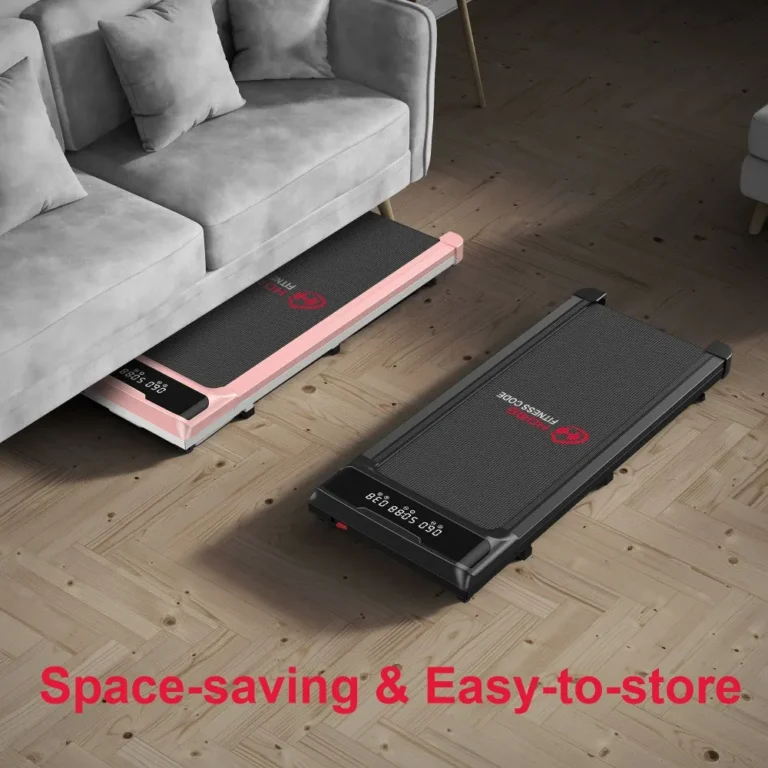
Retailer images from Home Fitness Code, not our own photos.
- Measure the space where it will be used and where it will be stored. Allow clearance behind the deck.
- Check your weight against the lowest figure the listing gives.
- Plug directly into a wall socket. Most manuals advise against extension leads.
- Read the returns policy: who pays to send back a 15–25 kg box if you change your mind?
- Keep the packaging for the first 14–30 days.
Frequently asked questions
What is the best walking pad in Ireland for most people?
On published specifications and price, the Home Fitness Code Q2 Pro (€99.99 on 12 October) is our best all-rounder: brushless motor, 1–10 km/h and a 120 kg rating. If quiet matters most, look at the Z3; if you weigh more than about 110 kg, look at the Y3. We have not tested these machines ourselves.
Is a walking pad worth it if I already walk outside?
It is most useful for time you would otherwise spend sitting, such as calls, emails or TV, and on wet evenings. It will not replace outdoor walking for fresh air, varied terrain or daylight.
Can I run on a walking pad?
Only on models that reach about 8–10 km/h, and even then the short, narrow belts suit jogging better than running. If running is a priority, compare folding treadmills for small spaces instead.
Do walking pads work on carpet?
Most manufacturers recommend a hard, level floor or a firm mat. Thick carpet can restrict airflow to the motor and let the deck shift.
How much should I spend?
On 12 October 2026, walking pads we found started at €99.99. Paying more mainly buys powered incline, a higher weight limit and, in some cases, a longer warranty. See what €100, €200 and €400 buys in a walking pad.
Which walking pad is best for someone up to 150 kg?
On 13 October the Y3 (€199.99) was the only in-stock pad in this guide with a stated 150 kg limit; the Y5 is also rated for 150 kg but was sold out. The Y1 (€169.99) is rated for 145 kg. Leave a margin of 15–20 kg below the stated limit. Our guide to walking pads with a 150 kg weight limit explains why.
Can I get a walking pad with a handrail in Ireland?
Yes. On 13 October the cheapest in-stock option was the Home Fitness Code C1 with handrail (€119.99), followed by the Y3 with handrail (€229.99). Elverys sells the Body Sculpture Walking Pad with Handrail for €299 (rated for 100 kg). Compare them in our walking pads with handrails guide.
What is the quietest walking pad?
On published claims, the Z3 (€109.99, “under 30 dB”) is the quietest in this guide, followed by the Q2 Pro and Y3 (“under 35 dB”). These are manufacturer figures, not our measurements, and footfall on the floor is often louder than the motor. See quiet walking pads for apartments for ways to cut noise.
Is a walking mat the same as a walking pad?
Usually, yes. Many Irish shoppers search for a “walking mat”, “walkpad” or “under-desk treadmill” and mean the same flat, motorised belt this guide covers. A floor mat that goes underneath a walking pad is a separate accessory: see walking pad mats and flooring.
Can I buy a walking pad in a shop in Ireland?
In a few places. Elverys lets you try walking pads in selected stores but delivers them, Decathlon offers click & collect on its own W500B in Dublin, and McSport has a showroom in Dublin 22. Argos no longer trades in Ireland. See where to buy a walking pad in Ireland.
How this guide was made: We have not tested these products ourselves. Our assessments use the specifications, prices and policies published by manufacturers and retailers, together with an analysis of real owner feedback: about 2,900 product reviews on Home Fitness Code’s site, 400 recent Trustpilot reviews, 416 Decathlon customer reviews and owner discussions on boards.ie (see what owners say). We checked them on 12 October 2026 and re-checked Home Fitness Code and Elverys prices and stock on 13 October 2026. Some links in this guide are affiliate links: Resolve Fitness earns a commission if you buy through them, at no extra cost to you. The publisher of Resolve Fitness also runs EaseMoov.ie, which is mentioned above. Read our affiliate disclosure and how we research.