This guide contains affiliate links. Details are at the end of the page.
“Folding treadmill” covers two quite different machines. Some are upright treadmills whose deck lifts vertically. Others are walking pads with a handrail that folds flat. If you want to run, or you like having something to hold, this guide helps you choose one that suits a small home. Below we compare every foldable treadmill we could find on sale in Ireland, from €119.99 to about €1,000. For non-folding and premium machines too, see our wider guide to treadmills in Ireland. If you mostly walk, a flat walking pad costs less: see the best walking pads in Ireland.
Key points
- Decide first whether you need to run. That sets the minimum speed and belt size.
- Check both the size in use and where the machine will stand or lie when folded, plus how you will move it there.
- Full-console treadmills are heavier, at 25 kg or more, but offer handrails, programs and higher speeds.
- Handrail walking pads are lighter and cheaper, but the handrail often has to be unscrewed to fold.
Folding treadmills sold in Ireland: quick comparison
These are folding models listed by Irish retailers when we checked, from handrail walking pads to full running treadmills. Prices change often, so check before you buy.
| Model (retailer) | Price* | Type | Top speed | Incline | Max user | Machine weight | Shop |
|---|---|---|---|---|---|---|---|
| Folding C1 (Home Fitness Code) | €119.99 | Walking pad with handrail | 10 km/h | 5% manual | 110 kg | 24 kg | Check price |
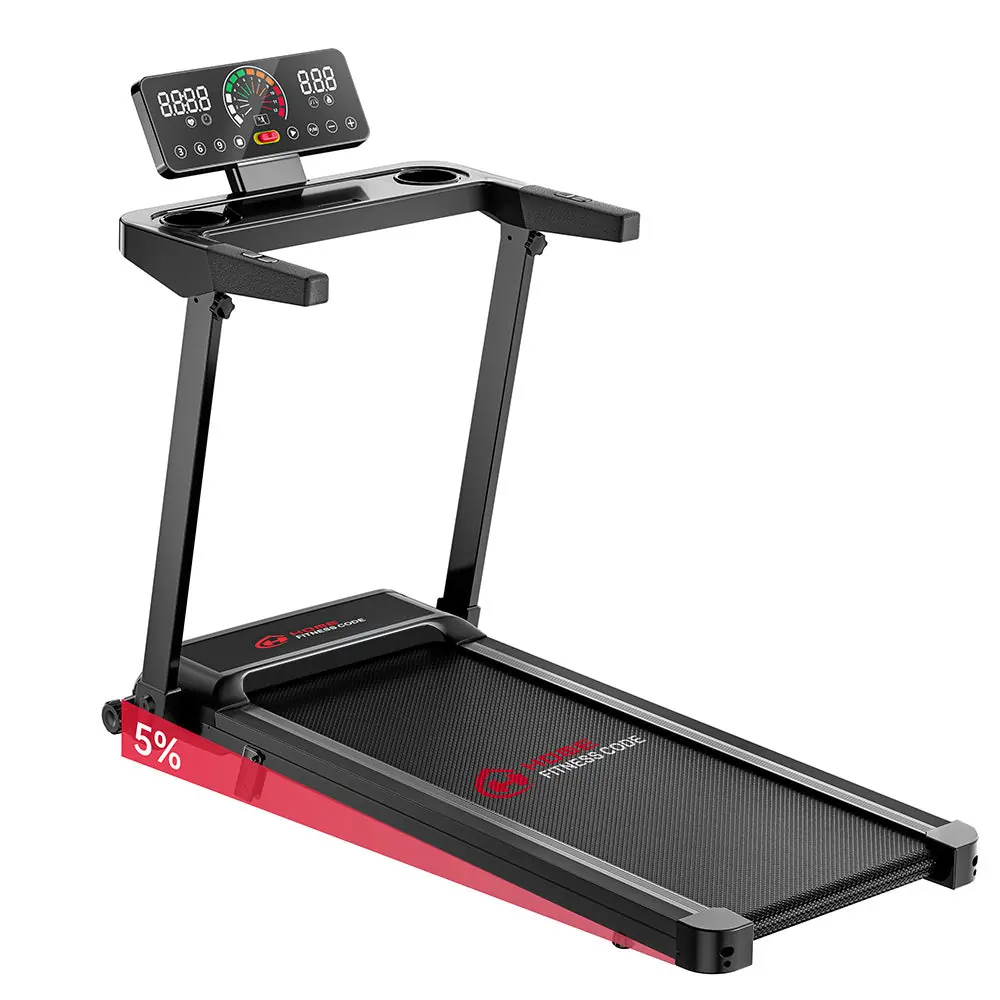
| Q8 (Home Fitness Code) | €219.99 | Folding treadmill | 12 km/h | 5% manual | 150 kg | 26.3 kg | Check price |
| Domyos TS100 (Decathlon) | €320 | Non-motorised, folding | You set the pace | Fixed 15% | 110 kg | 38.8 kg | Decathlon |
| Domyos T520B (Decathlon) | €530 | Folding treadmill | 13 km/h | Up to 10%, motorised | 130 kg | 62 kg | Decathlon |
| Domyos RUN500 (Decathlon) | €720 | Folding running treadmill | 16 km/h | Up to 10%, motorised | 130 kg | 58 kg | Decathlon |
| Xterra TRX2500 (McSport) | €799 | Folding running treadmill | 16 km/h | Powered, 10 levels | 136 kg | 94 kg | McSport |
| ProForm Carbon TL (Elverys) | €899 | Folding treadmill | 16 km/h | 0–10% | 136 kg | 81 kg | Elverys |
- Cheapest for walking and light jogging: the Folding C1 (€119.99), a walking pad with a handrail, rated for 110 kg.
- Cheapest motorised treadmill for running: the Q8 (€219.99), 1–12 km/h and rated for 150 kg, with a deck that folds up.
- Regular running with a longer warranty: Decathlon’s T520B (€530) or RUN500 (€720). Both are much heavier than a walking pad.
- Serious runners: the Xterra TRX2500 and ProForm Carbon TL (€799–€899) have 140 cm belts and reach 16 km/h, but weigh 81–94 kg. Check delivery terms, as heavy items are often delivered to the ground floor only.
Check Q8 price at Home Fitness Code

Two types of “folding treadmill”
| Upright folding treadmill | Walking pad with folding handrail | |
|---|---|---|
| Example | Q8 | Folding C1 (Folding Z3 and Folding Q2 Pro sold out on 13 Oct) |
| Price from* | €219.99 | €119.99 (C1, in stock 13 Oct) |
| Top speed | 12 km/h | 6–10 km/h |
| Stated max user | 150 kg | 110–120 kg |
| Console | Yes: 12 programs, heart-rate sensors, safety key | Small display, remote |
| Stored | Deck folds up; wheels to move | Lies flat once the handrail is lowered or removed |
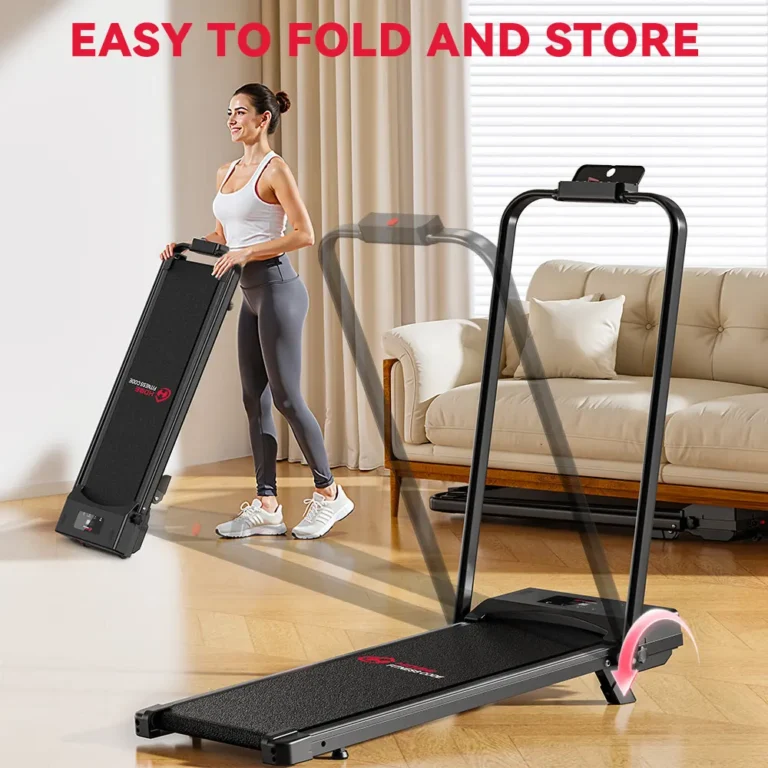
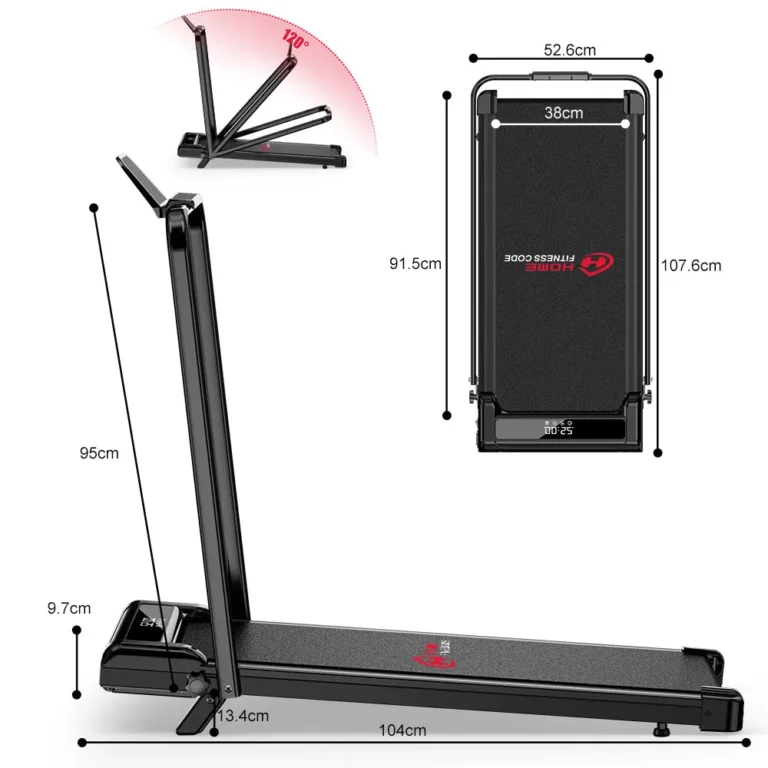
Retailer images from Home Fitness Code, not our own photos.
Measurements to check before you buy
- In-use footprint plus clearance: the Q8 is stated at 120.6 × 65.3 × 111 cm. Treadmill safety standards and many manuals call for a free area of about 2 m × 1 m behind the deck, plus some space at each side.
- Folded footprint and height: the retailer does not publish a folded size for the Q8, so ask before buying if space is tight.
- Belt size: 97 × 40 cm on the Q8. Runners with a long stride often prefer longer belts, which are found on larger, more expensive treadmills.
- Ceiling height: your head rises with each running stride, and incline lifts you further. This matters in attic rooms.
- Route: will you roll it over rugs, thresholds or stairs? A 26 kg machine is a two-person job upstairs.
Example models
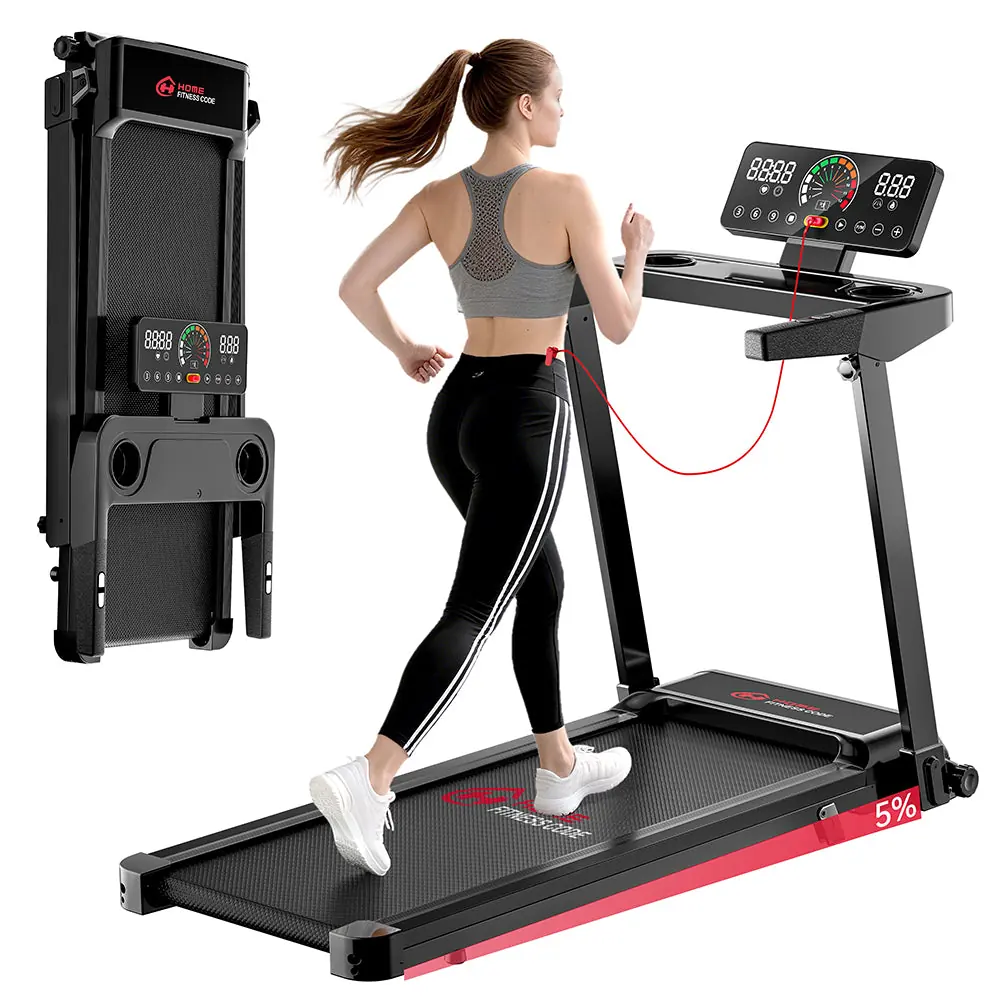
Q8 (from €219.99): 1–12 km/h, 5% manual incline, 150 kg stated maximum user, 3.0 HP brushed motor, 26.3 kg. It is the most “treadmill-like” option in this price range. The drawbacks: it is bulkier than a walking pad, the noise claim is higher (<50 dB), and there is no remote or app.
Check Q8 price at Home Fitness Code
Folding C1 (from €119.99): a 1–10 km/h walking pad with an attached handrail and a 110 kg rating. It suits people who want something to hold and occasional light jogging, without the size of a full treadmill.
Check Folding C1 price at Home Fitness Code
Decathlon, McSport and Elverys sell folding treadmills from about €320 to over €1,000, often with longer warranties; see the comparison above. Harvey Norman listed only one treadmill when we checked, sold online only. These are not affiliate links.
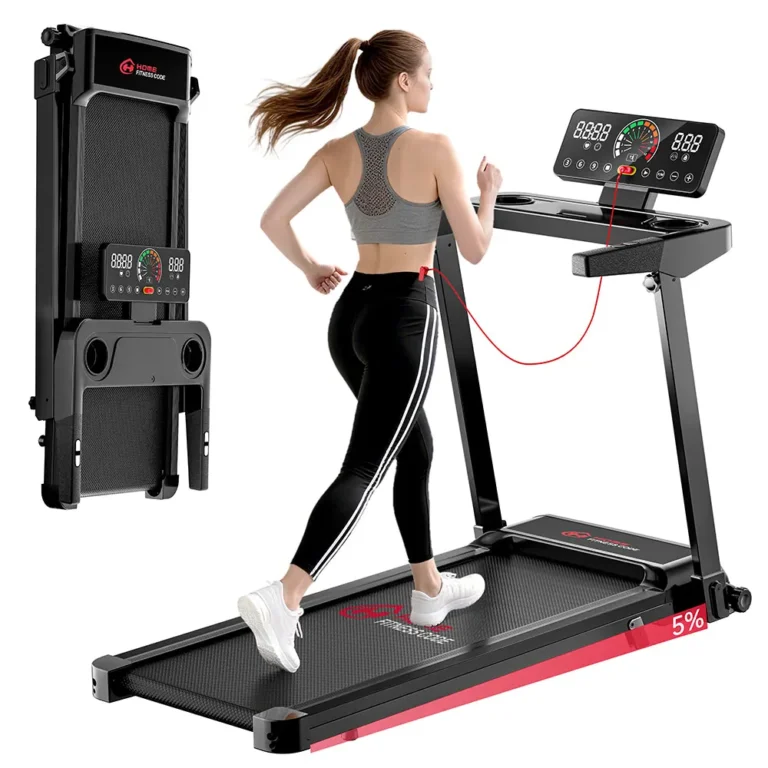
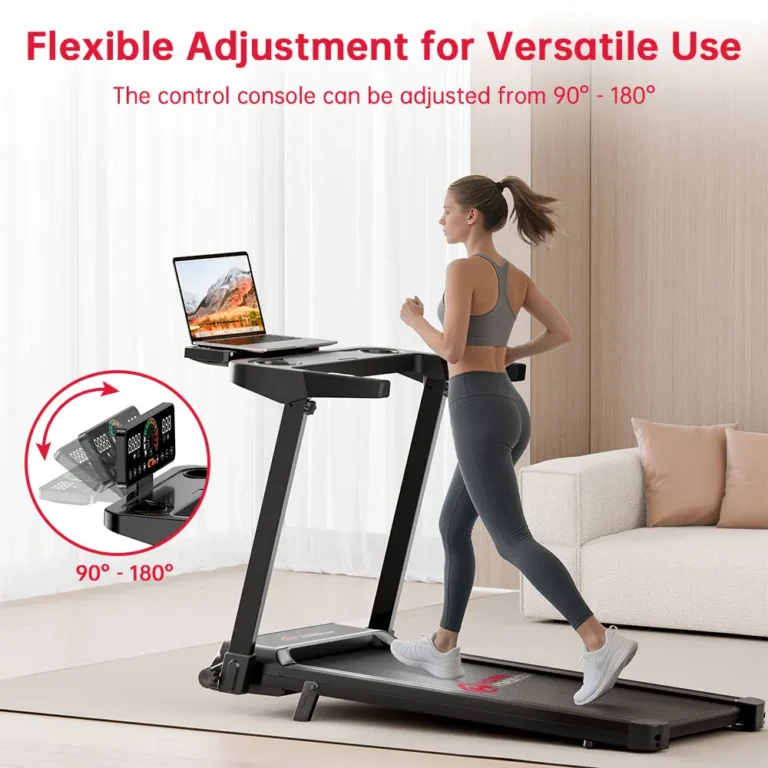
Retailer images from Home Fitness Code, not our own photos.
Is a folding treadmill right for you?
Choose one if you want to run at home, need full handrails for confidence, or want structured programs. Choose a walking pad instead if you mainly walk, need to store it under furniture, or want to walk at a desk. For low-impact cardio in the smallest footprint, a foldable exercise bike is another option.
Frequently asked questions
Can I leave a folding treadmill folded up all the time?
Yes, that is what the design is for. Make sure it is locked, stable and out of reach of children. Remove the safety key when it is not in use.
Do folding treadmills need a special socket?
No, they use a standard plug. Most manuals advise plugging directly into a wall socket rather than an extension lead.
How noisy is running at home?
Running produces far more impact noise than walking. Ground-floor rooms with solid floors are best, and a dense mat helps.
What is the best foldable treadmill in Ireland?
It depends on how you will use it. For walking with something to hold, the Folding C1 (€119.99) is the cheapest. For jogging on a budget, the Q8 (€219.99, 12 km/h, 150 kg) folds up and is light enough to move. For regular running, Decathlon’s RUN500 (€720), the Xterra TRX2500 (€799) and the ProForm Carbon TL (€899) all fold and reach 16 km/h, and Elverys’ NordicTrack T Series 7 (€999) also folds. Prices checked 12–13 October 2026.
Is a foldable treadmill as sturdy as a non-folding one?
Often not at the same price: the hinge and lighter frame mean budget folding treadmills usually have lower weight limits and shorter belts. At €700 and above, folding running treadmills from Decathlon, McSport and Elverys are rated for 130–136 kg.
How this guide was made: We have not tested these products ourselves. Our assessments use the specifications, prices and policies published by manufacturers and retailers. We checked them on 24 September 2026 and re-checked prices and stock on 12 October 2026 (Home Fitness Code and Elverys again on 13 October 2026). Some links in this guide are affiliate links: Resolve Fitness earns a commission if you buy through them, at no extra cost to you. Read our affiliate disclosure and how we research.