This guide contains affiliate links. Details are at the end of the page.
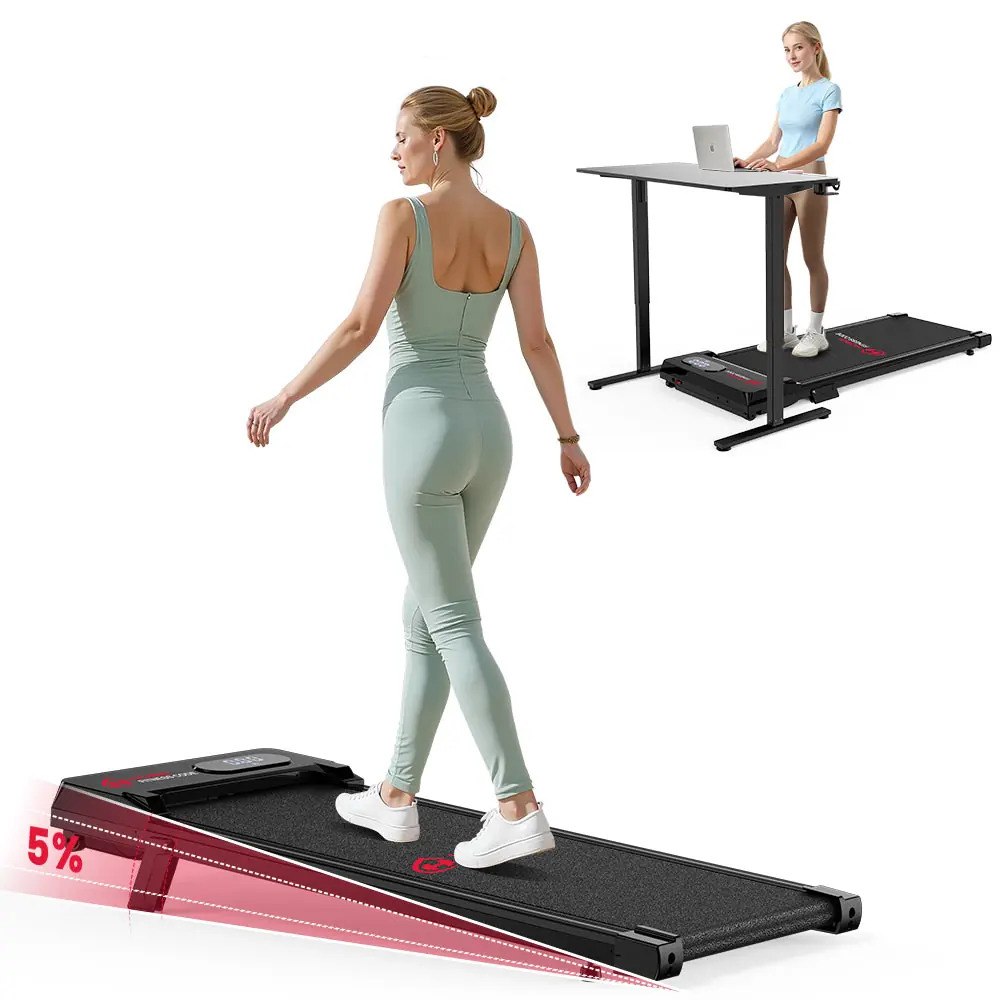
An under-desk treadmill is simply a walking pad used beneath a standing desk. Many Irish workers now spend some or all of the week at home, and the idea is appealing: add movement to hours you would otherwise spend sitting. It works best when the desk, the speed and your expectations are set up properly. This guide covers the set-up first and the machines second. To compare desk-friendly models with every other option, see all walking pads available in Ireland in one table.
Quick picks (prices checked 12 October 2026)
- Best for most home offices: Z3, €109.99. The lowest deck in our list (9.7 cm) and the lowest stated noise (under 30 dB), with 1–6 km/h and a 120 kg rating.
- Cheapest: T7, €99.99. 1–6 km/h, 10.5 cm high, 120 kg. Check T7 price
- Powered incline and a 150 kg rating: Y3, €199.99. 0–12% incline, 1–10 km/h. The Y5 was out of stock on 12 October. Check Y3 price
- Want to try one first? Elverys sells the Body Sculpture EZ (€199) and lets you try walking pads in selected stores. See where to buy.
Key points
- Most people settle at a slow pace while working. In one study, office workers chose about 1.8 km/h.
- Typing and detailed work are measurably harder while walking. Use the pad for calls, reading and email.
- A 1–6 km/h pad is usually enough; a top speed of 10 km/h adds little at a desk.
- You need a standing desk that rises high enough for you plus the deck height (about 10–15 cm).

What the research says about walking while working
Treadmill desks have been studied for nearly two decades. In a 2007 study by Levine and Miller, office workers chose an average speed of about 1.1 mph (roughly 1.8 km/h). Energy use rose by around 119 kcal per hour compared with seated work. A one-year trial published in 2013 found participants reduced sedentary time by 40–90 minutes a day. Average weight change was small (about 1.4 kg) and varied widely.
There is a cost to concentration. A 2015 study found typing speed and some learning measures dropped while walking at about 2.4 km/h. The practical takeaway: walk during calls, reading and routine tasks, and sit or stand still for focused writing.
Setting up your desk
- Desk height: with elbows at about 90°, your desk will need to sit 10–15 cm higher than your usual standing height to allow for the deck. Check your desk’s maximum height before buying.
- Depth: keep a clear area behind the pad. Treadmill safety standards and many manuals specify a free zone of up to 2 m × 1 m behind the deck, because the rear of the belt is where a slip is most likely. Follow your model’s manual.
- Monitor: raise it so you are not looking down while moving.
- Cable: route the power cable away from your feet and plug it straight into a wall socket.
- Controls: most pads use a remote. Keep it on the desk, and make sure a stop button is within reach.
Noise on video calls
Microphones pick up a steady hum and the thud of footsteps. Manufacturer noise claims range from under 30 dB to under 50 dB. They are useful for ranking, but they are measured in conditions nobody publishes. In practice, walking slowly in soft-soled shoes on a firm mat, with a headset microphone, helps more than chasing the lowest dB figure. Our quiet walking pad guide goes into floors and mats.
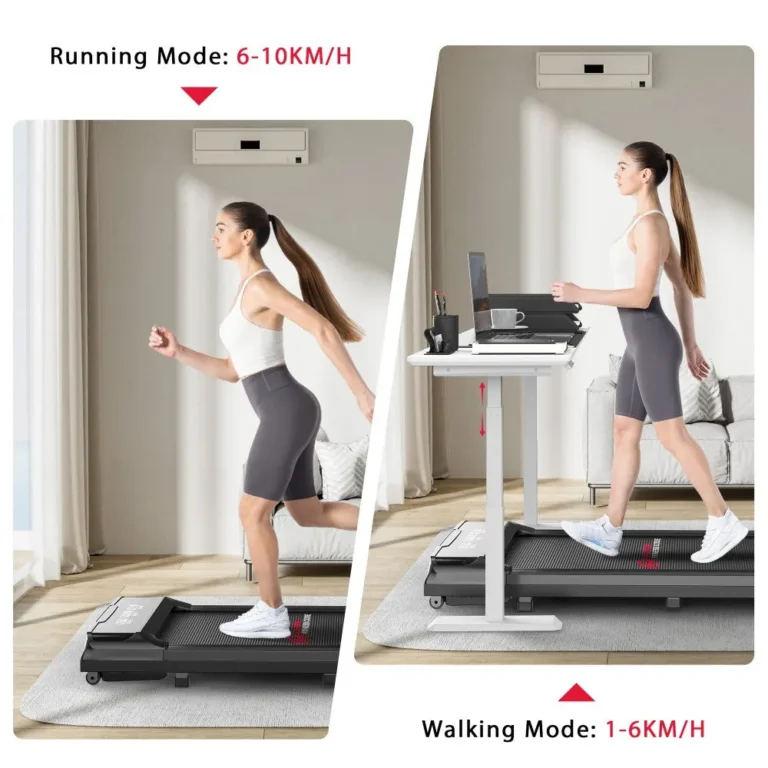
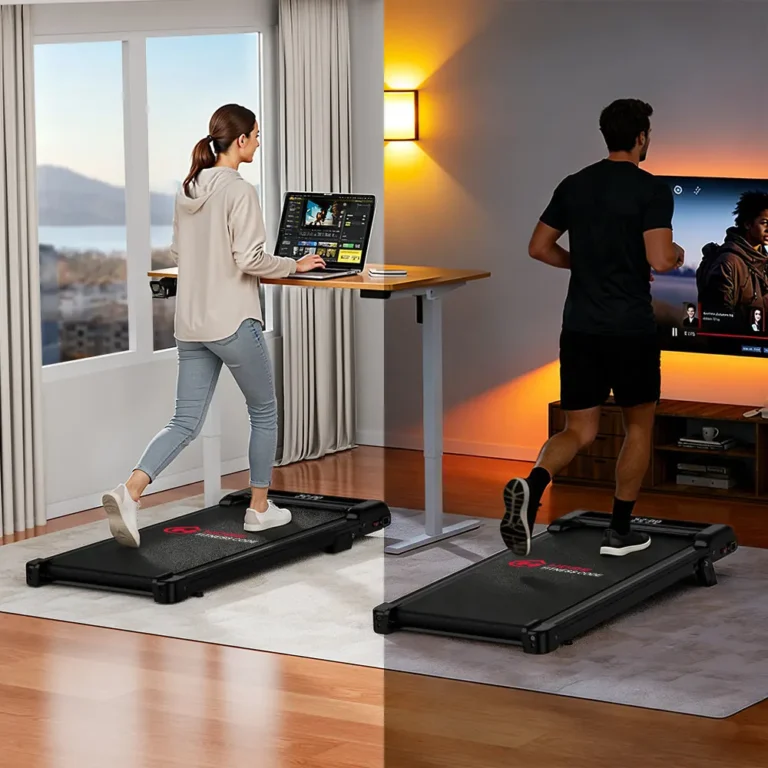
Retailer images from Home Fitness Code, not our own photos.
Under-desk treadmills to consider
| Model | Price from* | Speed | Height | Footprint | Max user | Stated noise |
|---|---|---|---|---|---|---|
| Z3 (Home Fitness Code) | €109.99 | 1–6 km/h | 9.7 cm | 104 × 49 cm | 120 kg | <30 dB |
| T7 (Home Fitness Code) | €99.99 | 1–6 km/h | 10.5 cm | 105 × 47.5 cm | 120 kg | <40 dB |
| Q2 Pro (Home Fitness Code) | €99.99 | 1–10 km/h | 13 cm | 115 × 53 cm | 120 kg | <35 dB |
| Y3 (Home Fitness Code) | €199.99 | 1–10 km/h, 0–12% incline | Not stated | Not stated | 150 kg | Not stated |
| Y5 (Home Fitness Code) | €219.99 (out of stock on 12 Oct) | 1–10 km/h, 0–15% incline | 12.2 cm | 118 × 50 cm | 150 kg | <35 dB |
| Body Sculpture EZ (Elverys) | €199 | 1–6 km/h | 12.2 cm | 124.2 × 52.9 cm | 100 kg | Not stated |
Our pick for a small home office: the Z3 has the lowest profile and the lowest noise claim in its range, and a desk-friendly top speed. It uses a manual (fixed) incline and is rated to 120 kg. If you are heavier or want powered incline, the Y3 (€199.99, rated for 150 kg) is the step up, although it costs nearly twice as much. The Y5 was out of stock when we checked. If you want to try a pad in person first, check Elverys or Decathlon; see where to buy.
Check Z3 price at Home Fitness Code
Check Y3 price at Home Fitness Code
Is it worth it for you?
It suits people who take long calls, are at home most of the week, and have room for a standing desk. It suits you less if your work is mostly intensive typing, if you share a small space with others working, or if you would be happier taking a 20-minute walk outside at lunch. Irish physical activity guidelines encourage breaking up long periods of sitting, and an under-desk treadmill is one way to do that. It is not the only way.
What owners say
What owners say about desk use. Walking while working is one of the most common reasons given in about 2,900 reviews on Home Fitness Code’s site (checked 13 October 2026), with well over 100 owners mentioning a desk, working from home or calls. Most describe the T7, C1, Q2 Pro and Z3 as quiet enough for home use. A couple of taller Q2 Pro owners say the deck feels short. See our full owner feedback analysis.
Frequently asked questions
Do I need a standing desk?
Yes, realistically. Walking at a normal desk is not practical. A desk converter can work if it rises high enough to allow for the deck.
How long should I walk for each day?
Start with short blocks, such as 15–30 minutes, a few times a day, and build up as it feels comfortable. Wear supportive shoes and take breaks.
Will my employer pay for it?
Some Irish employers offer home-working equipment budgets. Check your company policy. Walking pads are not usually covered by standard allowances.
How this guide was made: We have not tested these products ourselves. Our assessments use the specifications, prices and policies published by manufacturers and retailers, together with an analysis of real owner feedback from retailer reviews, Trustpilot and owner forums (checked 13 October 2026). We checked them on 24 September 2026 and re-checked prices and stock on 12 October 2026. Some links in this guide are affiliate links: Resolve Fitness earns a commission if you buy through them, at no extra cost to you. Read our affiliate disclosure and how we research.