Short answer: yes, a little, but do not expect much from the walking pad alone. Walking slowly at a desk uses roughly 100–130 more calories an hour than sitting. In a year-long study of treadmill desks, people lost about 1.4 kg on average, and some lost nothing. A walking pad is best seen as an easy way to sit less and move more, while what you eat usually has the bigger effect on weight. Here is what the evidence supports. If you decide to buy one, our walking pad Ireland buying guide compares the models on sale now, from €99.99.
Health note: This article is general information, not medical advice. If you have a health condition, are pregnant, or are starting exercise after a long break, speak with your GP first. Resolve Fitness has no medical professionals on staff. We summarise published research and link to it so you can read the source.
Key points
- Slow walking at a desk uses roughly 100–130 extra kcal per hour compared with sitting, according to a well-known study of office workers. How much depends on your body weight and speed.
- In a one-year treadmill-desk trial, the average weight loss was about 1.4 kg, and results varied a lot between people.
- The biggest benefit may be less sitting. Irish guidelines encourage breaking up sedentary time.
- Be sceptical of product images that promise a percentage of extra calories burned.
How many calories does walking on a walking pad use?
Energy use during activity is often expressed in METs (metabolic equivalents). One MET is roughly 1 kcal per kilogram of body weight per hour at rest. The Compendium of Physical Activities lists slow treadmill walking, at about 1.6–3.8 km/h, at roughly 2.3–3.0 METs. Faster walking has higher values.
As a rough illustration: an 80 kg person walking at about 2.8 METs uses around 224 kcal in an hour, before subtracting what they would have used sitting anyway. That is consistent with a 2007 study of office workers walking at a self-chosen 1.8 km/h. It found about 119 kcal per hour more than seated work. These are averages. Your real figure depends on your weight, pace, fitness and how you walk, and the calorie displays on walking pads are estimates.
| Time walking slowly per workday | Approx. extra energy vs sitting* |
|---|---|
| 30 minutes | ~60 kcal |
| 1 hour | ~120 kcal |
| 2 hours | ~240 kcal |
What long-term studies found
Short studies measure calories. Weight change needs longer trials. In a one-year study of treadmill desks, 36 office workers reduced their sitting time by 40–90 minutes a day on average. Average weight loss was 1.4 kg, with a spread of ±3.3 kg. In other words, some people lost more, and some lost none or gained. That pattern is typical. Adding activity can raise appetite, and people unconsciously move less at other times.
Why the walking pad still matters
Weight is only one outcome. The HSE’s “Every Move Counts” guidelines recommend 150–300 minutes of moderate activity each week and muscle-strengthening on at least two days. They also encourage adults to replace sitting with activity of any intensity. A walking pad makes it easier to collect those minutes on wet days or during working hours. For many people, that consistency is the real value.
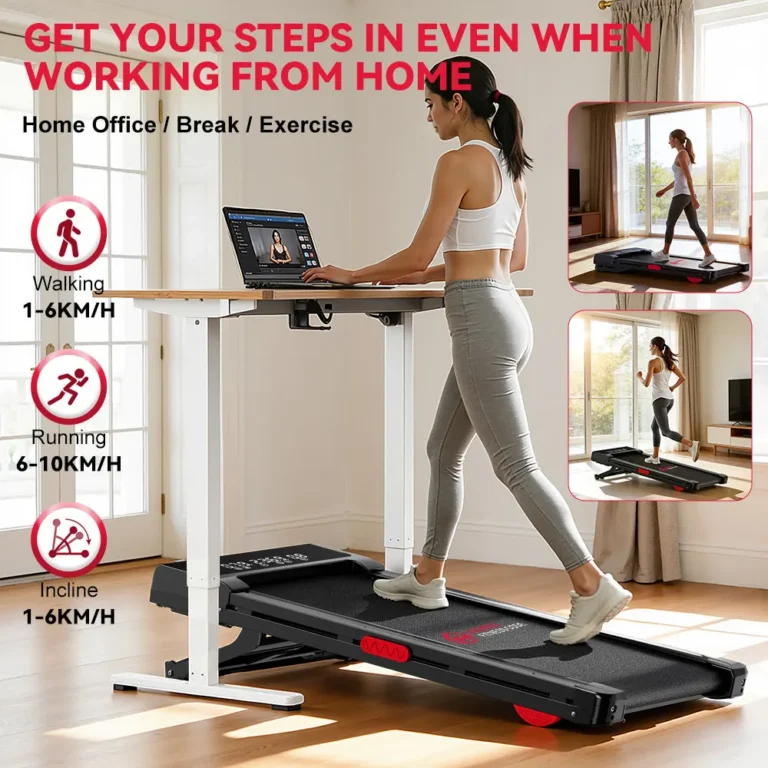
Retailer image from Home Fitness Code, not our own photo.
A sensible way to use one
- Set a time or step goal you can keep, such as two 30-minute walks during calls, rather than an ambitious calorie target.
- Add some brisk walking, gentle incline or an outdoor walk each week for moderate-intensity minutes.
- Include strength work twice a week; see our small home gym guide.
- Pay attention to food and drink. For weight loss, diet usually has the larger effect. A GP, practice nurse or registered dietitian can give personal advice.
- Track trends over weeks, not days.
Choosing a walking pad for regular use
If you will walk for long periods, prioritise a comfortable belt length, a weight rating with a margin, and noise you can live with. Top speed matters less. Our walking pad buyer’s guide compares current models. If you would like to vary the effort, read our guide to incline walking pads.
Frequently asked questions
Does a walking pad help you lose weight?
It can help a little, by adding movement to time you would otherwise spend sitting. On its own the effect is usually small: about 1.4 kg on average over a year in one treadmill-desk study, with wide differences between people. Combined with changes to what you eat, it is a practical way to stay active.
How long should I walk on a walking pad to lose weight?
There is no single answer. It depends on your diet, body size and overall activity. Aim to meet the weekly activity guidelines and build the habit. Speak to a GP or dietitian for a personal plan.
Is 10,000 steps a day necessary?
No. It is a popular round number, not a medical threshold. More movement than you currently do is a reasonable goal.
Do walking pad calorie counters work?
They are estimates, usually based on speed and time, sometimes with your weight. Use them to compare sessions, not as an exact measurement.