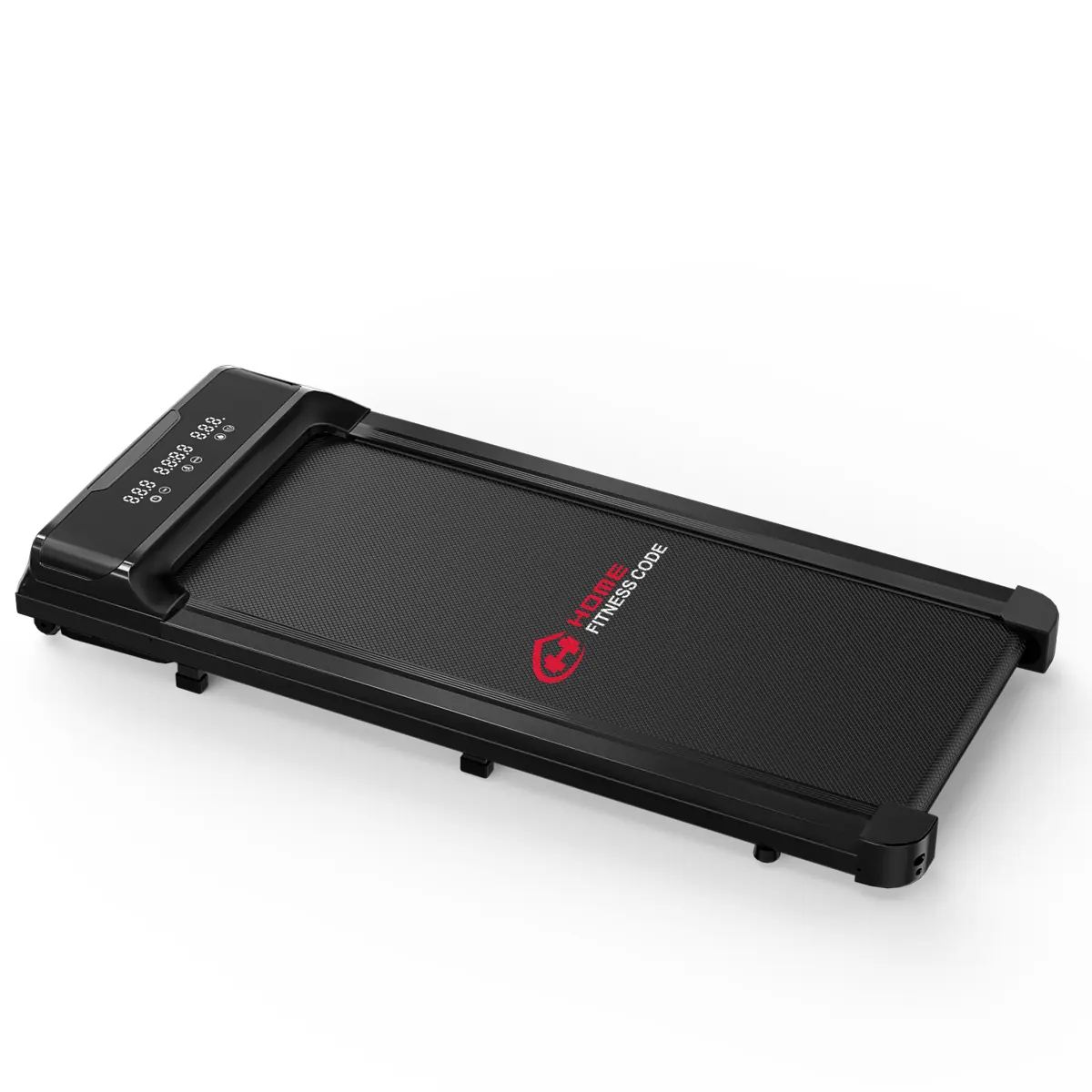
How this guide was made: We have not tested these products ourselves. Our assessments use the specifications, prices and policies published by manufacturers and retailers. We checked them on 24 September 2026. Links marked “affiliate” earn Resolve Fitness a commission if you buy, at no extra cost to you. Read our affiliate disclosure and how we research.
A walking pad is a flat, motorised belt for slow walking. It has no tall console, and it is built to slide under a sofa or bed when you are done. Irish buyers usually care about four things: whether it fits the space, whether the neighbours will hear it, whether it can take their weight, and whether the price includes delivery. This guide compares models you can order in Ireland today. It sets out what the published specifications do and do not tell you.
The short version
- For most people walking at a desk, a 1–6 km/h pad is enough. You only need 10 km/h if you want to jog.
- Check the maximum user weight and leave a margin of 15–20 kg. Many budget pads are rated for only 100–120 kg.
- Incline adds cost and weight. It is useful if you want more effort without walking faster (see our incline guide).
- Noise figures such as “under 35 dB” are manufacturer claims measured in unknown conditions. Treat them as a rough ranking, not a promise.
- Buy from a seller with clear returns. Under Irish consumer law, online buyers generally have a 14-day cooling-off period.

How we chose the models in this guide
We started from what Irish shoppers actually search for. We then listed walking pads that can be ordered for delivery to Ireland with a clear price in euro. For each one we recorded the retailer’s stated speed range, incline, maximum user weight, belt size, dimensions and weight. We also noted the returns and warranty terms. We did not use the machines, measure noise or time deliveries. Where a listing contradicts itself, we say so and use the more cautious figure.
Several models below are sold by Home Fitness Code, which pays us a commission. To keep the comparison useful, we also include pads from Irish high-street and sports retailers that pay us nothing.
Walking pads compared: published specifications
| Model (retailer) | Price from* | Speed | Incline | Max user | Belt (L×W) | Stated noise |
|---|---|---|---|---|---|---|
| Q2 Pro (Home Fitness Code) | €99.99 | 1–10 km/h | None stated | 120 kg† | 97 × 39.5 cm | <35 dB |
| T7 (Home Fitness Code) | €99.99 | 1–6 km/h | 5% manual | 120 kg | 90 × 38 cm | <40 dB |
| C1 (Home Fitness Code) | €99.99 | 1–10 km/h | 5% manual | 120 kg† | 97 × 39 cm | <50 dB |
| Z3 (Home Fitness Code) | €109.99 | 1–6 km/h | 5% manual | 120 kg | 91.5 × 38 cm | <30 dB |
| Y1 (Home Fitness Code) | €169.99 | 1–10 km/h | 0–12% auto | 145 kg | 98 × 40 cm | <50 dB |
| Y3 (Home Fitness Code) | €199.99 | 1–10 km/h | 0–12% auto | 150 kg | 97 × 39 cm | <35 dB |
| Y5 (Home Fitness Code) | €219.99 | 1–10 km/h | 0–15% auto | 150 kg | 97 × 40 cm | <35 dB |
| ITM Walking Pad 400 (Decathlon marketplace) | €149 | 1–6 km/h | 2 manual levels | 100 kg | Not stated | Not stated |
| Urban Fitness Foldable Walking Treadmill (Elverys) | €199 | 1–8 km/h | None | 100 kg | Not stated | Not stated |
| Domyos W500B (Decathlon) | €400 | 0.5–8 km/h | None stated | 130 kg | Not stated | Not stated |
Which walking pad suits which home?
Tightest budget: T7, C1 or Q2 Pro (from €99.99)
These three share the same starting price, but they differ in useful ways. The T7 tops out at 6 km/h, so it is strictly a walking machine. At 10.5 cm tall and 16 kg, it is one of the easier pads to slide under furniture. The C1 and Q2 Pro reach 10 km/h for light jogging. The Q2 Pro uses a brushless motor, which manufacturers usually present as quieter and longer-lasting. The C1 uses a conventional brushed motor and carries a higher noise claim (<50 dB).
Limitations: all three are rated for about 120 kg, and the C1 listing contradicts itself on this. The belts are 38–39.5 cm wide, which is narrower than a gym treadmill. Taller walkers with a long stride may find the 90 cm T7 deck short.
Check T7 price at Home Fitness Code Affiliate link
Check Q2 Pro price at Home Fitness Code Affiliate link
Small flats and upstairs rooms: Z3 (from €109.99)
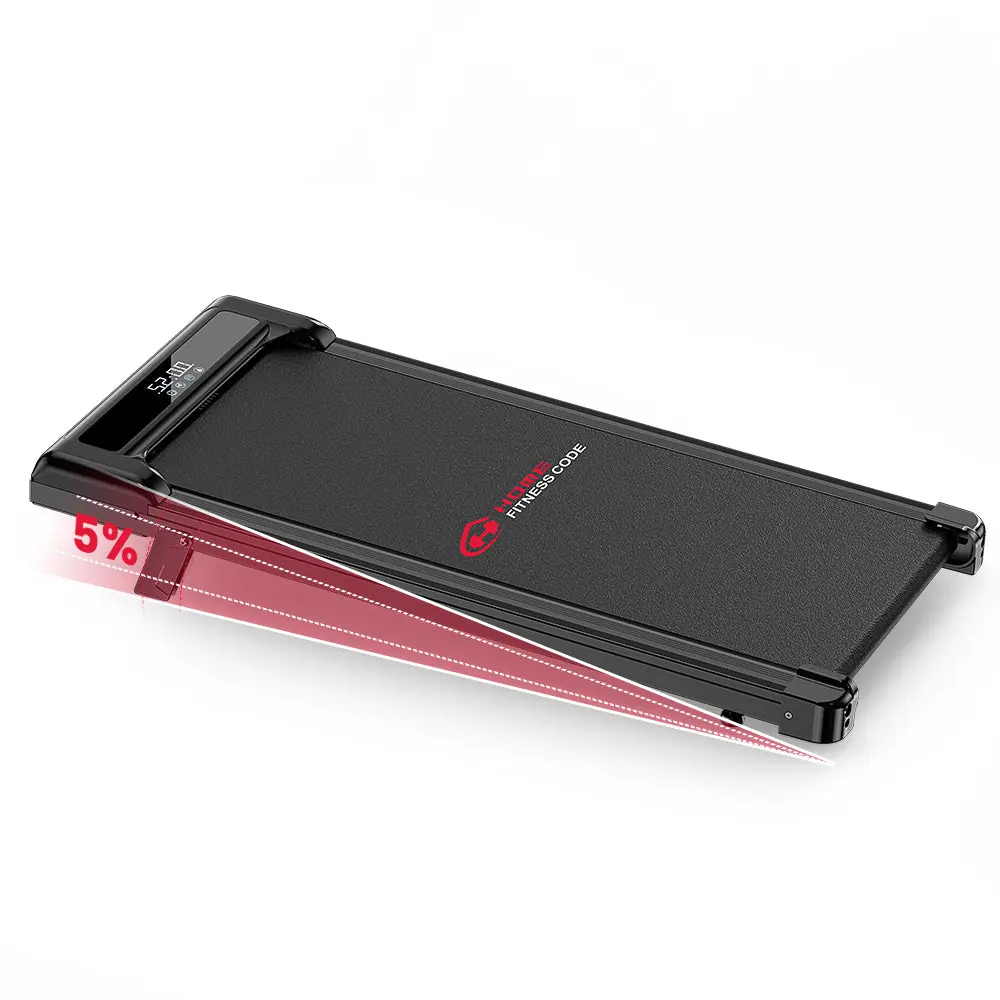
The Z3 has the smallest footprint in the Home Fitness Code range: 104 × 49 cm, 9.7 cm tall and 13 kg according to the retailer. It also carries the lowest noise claim (<30 dB) and a brushless motor. It is limited to 6 km/h, and its manual 5% incline means lifting the front by hand rather than pressing a button. If you live above someone, remember that noise from footfall passing through the floor is often the bigger issue. Motor noise is only part of it. Our quiet walking pad guide covers mats and timing.
Check Z3 price at Home Fitness Code Affiliate link
Heavier users or a harder workout: Y3 or Y5 (from €199.99)
The Y3 and Y5 are the only pads here with a stated 150 kg limit, powered incline (12% and 15%) and a brushless motor. They cost roughly twice as much as the entry models, and at around 20 kg they are heavier to move. The Y1 is a cheaper route to powered incline, rated for 145 kg, but it uses a brushed motor and the listing claims a louder <50 dB. More detail is in our guide for heavier users.
Check Y5 price at Home Fitness Code Affiliate link
Prefer to see it in a shop first: Elverys or Decathlon
If you would rather buy from an Irish high-street retailer, Elverys and Decathlon both list walking pads online. Elverys advertises free returns to its stores. Decathlon’s own-brand Domyos W500B costs more, at €400, but Decathlon states a 2-year warranty (5 years on the frame) and a long returns window. Stock varies by store, so ring ahead. Neither link is an affiliate link. Our where to buy guide compares delivery and returns in detail.
What the specifications do not tell you
- Real-world noise. Decibel claims are rarely accompanied by a distance or test method. Your floor type matters as much as the motor.
- Long-term reliability. A 12-month warranty (Home Fitness Code) and a 2-year warranty (Decathlon) are not the same safety net.
- Motor rating. Figures like “2.5 HP peak” describe a short burst, not continuous output, so they are hard to compare between brands.
- Assembly and maintenance. Most pads need the belt lubricating and occasionally re-centring. Ask what the seller supplies.
Before you buy: a quick checklist
- Measure the space where it will be used and where it will be stored. Allow clearance behind the deck.
- Check your weight against the lowest figure the listing gives.
- Plug directly into a wall socket. Most manuals advise against extension leads.
- Read the returns policy: who pays to send back a 15–25 kg box if you change your mind?
- Keep the packaging for the first 14–30 days.
Frequently asked questions
Is a walking pad worth it if I already walk outside?
It is most useful for time you would otherwise spend sitting, such as calls, emails or TV, and on wet evenings. It will not replace outdoor walking for fresh air, varied terrain or daylight.
Can I run on a walking pad?
Only on models that reach about 8–10 km/h, and even then the short, narrow belts suit jogging better than running. If running is a priority, compare folding treadmills instead.
Do walking pads work on carpet?
Most manufacturers recommend a hard, level floor or a firm mat. Thick carpet can restrict airflow to the motor and let the deck shift.
How much should I spend?
On 24 September 2026, pads we found started at about €100. Paying more mainly buys powered incline, a higher weight limit and, in some cases, a longer warranty. See our budget guide.