About this guide: This is a planning guide, not a product review. Where we mention products or prices, they come from retailer websites checked on 24 September 2026. Some links elsewhere on this site are affiliate links; see our disclosure.
A home gym does not need a spare room or a big budget. Most Irish homes can fit an effective set-up in a corner of a bedroom or living room, as long as you buy in the right order and plan for storage. This guide links to our more detailed guides as you go.
The plan in brief
- Start with bodyweight training and a mat: close to free, and it covers strength.
- Add adjustable resistance, such as bands or a compact dumbbell set, before any large machine.
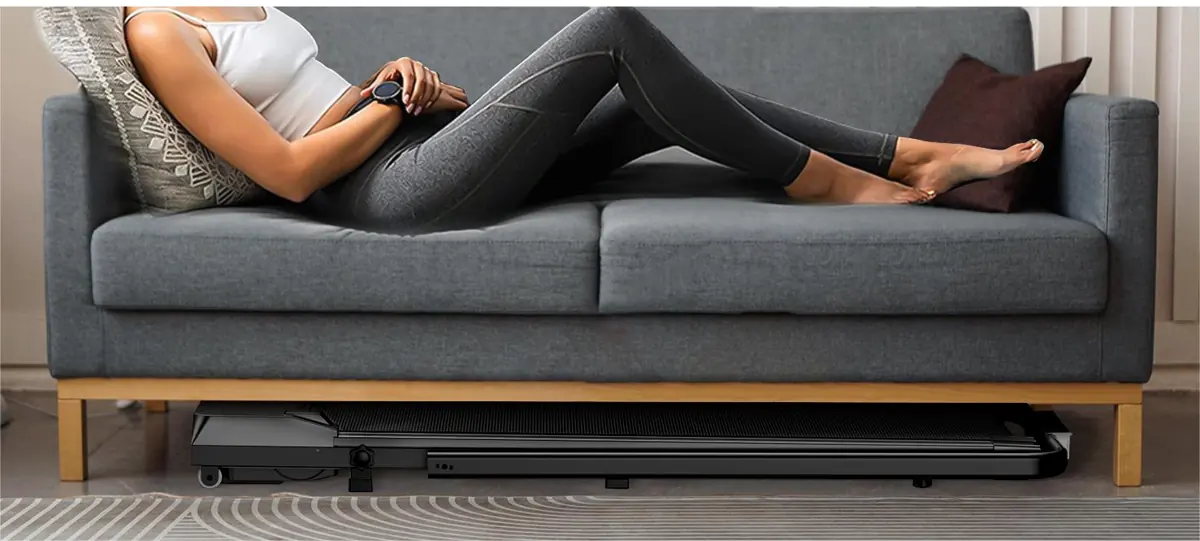
- Pick one cardio machine that suits your space: a walking pad, a folding treadmill or an exercise bike.
- Plan storage and flooring before you buy anything heavy.
Step 1: Measure your space honestly
Write down three measurements: the floor area you can use while exercising, the storage space available (under the bed, behind a door, in a corner), and the ceiling height if you plan to jump or run. A 2 × 1 m clear area is enough for most mat-based workouts. Cardio machines need their own footprint plus safety clearance.
Step 2: Cover strength first (almost free)
The HSE guidelines recommend muscle-strengthening activity on at least two days a week (source). You can do this with squats, lunges, push-ups (against a wall or a counter to start), glute bridges, rows with a band, and planks. A thick exercise mat protects your floor and knees, and rolls up small.
Step 3: Add resistance that packs away
- Resistance bands are the cheapest and smallest option, and suit rows, presses and warm-ups.
- Adjustable dumbbells replace a rack of fixed weights. For example, Home Fitness Code listed a “4 in 1” dumbbell set from €59.99 on our check date.
- A sturdy chair or step works for step-ups and incline push-ups before you consider a bench.
Step 4: Choose one cardio machine
| Option | Best for | Space | Typical price (Sept 2026) | Our guide |
|---|---|---|---|---|
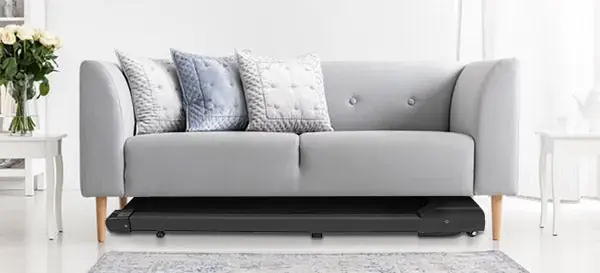
| Walking pad | Walking, desk use, storing under furniture | About 105–120 × 50 cm; 10–15 cm tall | €100–€400 | Walking pads |
| Folding treadmill | Running, handrails | About 120 × 65 cm in use; folds upright | €120–€250+ | Folding treadmills |
| Folding exercise bike | Low impact, quiet | Folds to about 53 × 53 cm (stated) | €130+ | Exercise bikes |
| Stepper | Short, intense sessions | Very small | €60–€90 | Not yet covered |
Step 5: Flooring and storage
- Use a dense rubber or equipment mat under machines to protect floors and reduce vibration.
- Store flat items (mats, walking pads) under beds or sofas; hang bands on a hook.
- Keep cardio machines unplugged when not in use, and remove safety keys if children are around.
- Check that the socket is close enough, because most machine manuals advise against extension leads.
What to skip (at least at first)
- Multi-gyms and cable machines: bulky and expensive, and rarely needed early on.
- Vibration plates and gadgets sold with dramatic calorie claims.
- Buying several cardio machines “to keep it interesting”. Consistency with one usually beats variety.
A simple weekly routine
| Day | Session (20–40 min) |
|---|---|
| Mon | Strength: squats, push-ups, band rows, bridges (2–3 rounds) |
| Tue | Walk: outdoors or on a walking pad |
| Wed | Rest or gentle mobility |
| Thu | Strength: lunges, dumbbell press, plank (2–3 rounds) |
| Fri | Cardio: bike, brisk walk or incline walk |
| Weekend | A longer walk outside |
Frequently asked questions
How much does a basic home gym cost in Ireland?
A mat and bands can cost well under €50. Adding a compact dumbbell set and one cardio machine typically brings the total to €200–€450, depending on the machine.
What is the best cardio machine for a small flat?
Usually a walking pad (flat storage) or a folding exercise bike (quiet, small when folded). If you want to run, a folding treadmill needs more space.
Can I build muscle at home without weights?
Yes. Beginners can make good progress with bodyweight exercises and bands, increasing repetitions, slowing the tempo or making exercises harder over time.